


Phoenix Biltmore Multifamily Holds Premium as Citywide Values Decline
A 20-unit 1962 Biltmore property sold off-market at $237,500 per unit, above Phoenix’s citywide average, revealing how submarket location overrides market-wide headwinds.
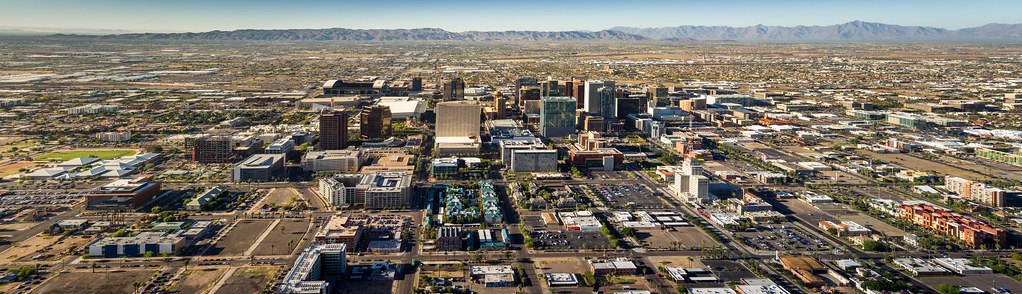
When Marcus & Millichap’s Phoenix office arranged the sale of Fireside Apartments at 4202 N. 27th St. this July, the numbers told a story that contradicts the broader Phoenix multifamily narrative. The 20-unit, 1962-vintage complex fetched $4.75 million, or $237,500 per unit, a figure that clears the Phoenix metro’s Q1 2026 average of $221,942 per unit by roughly seven percent. According to the Kidder Matthews Q1 2026 Phoenix Multifamily Market Report, that citywide average slid 12 percent year-over-year as elevated construction deliveries from the prior cycle weighed on values across the metro. The Biltmore submarket, it turns out, was exempt.
Why the Biltmore Submarket Operates on Different Terms
The Biltmore area sits at a crossroads that most Phoenix submarkets cannot replicate. Within walking distance or a short commute from Fireside Apartments, tenants have access to the Arizona Biltmore Resort, Biltmore Fashion Park, the dense employment corridor along Camelback Road, and freeway connectivity via Interstate 10 and Loop 202. Proximity to these anchors compresses vacancy in a way that metro-wide statistics cannot capture.
The concentration of Class A employment matters most. The Camelback Corridor hosts a dense cluster of finance, legal, healthcare administration, and consulting firms. Apartments close enough to eliminate or shorten that commute do not compete primarily on rent concessions: they compete on convenience. That is a fundamentally different demand dynamic than what is driving softness in outer-ring Phoenix delivery markets.
Vintage stock in prime locations benefits from a structural supply ceiling. No developer is building new 20-unit garden apartments in the Biltmore area. Land costs and entitlement complexity make small-scale infill impossible to pencil at market rents. For buyers of buildings like Fireside, this means competition for the asset class is structural rather than cyclical. Even in a quarter when Phoenix delivered nearly 3,000 new multifamily units metro-wide, the Biltmore’s infill character kept Fireside outside that competitive set entirely.
What the Off-Market Structure Reveals About Sophisticated Investor Behavior
The Fireside sale was completed off-market. That detail carries as much analytical weight as the price. In a market where institutional buyers and well-capitalized private investors monitor every listing on the major commercial platforms, the properties that move off-market do so because the right brokerage relationships surface them first.
Off-market multifamily transactions in Phoenix have grown as a share of deal volume precisely because sellers want to avoid anchoring to a public listing price in a soft environment, and buyers want to sidestep sealed-bid competition. A senior managing director at Marcus & Millichap with deep Arizona investment sales coverage has the network to identify motivated sellers before an asset ever reaches formal listing. The buyer, Aurora Palms LLC, acquired a value-add asset in a supply-constrained submarket without competing at auction. That is not luck; it is the product of a specific brokerage relationship.
The renovation thesis at Fireside is straightforward: bring the 1962 building’s interior and exterior finishes to a standard that supports Biltmore-adjacent rents, then benefit from the structural vacancy advantage the submarket provides. Aurora Palms plans to enhance the courtyard and pool areas as well, which matters in a Phoenix rental market where outdoor amenity quality influences tenant retention as much as unit finishes do.
What This Means for Arizona Multifamily Investors in 2026
Phoenix’s multifamily market in mid-2026 is bifurcated in ways that aggregate figures obscure. Net absorption reached 4,496 units in Q1 2026, up 34 percent year-over-year, indicating healthy demand absorption. At the same time, construction deliveries fell to 2,978 units in the same quarter, down 28 percent year-over-year, signaling a thinning pipeline. That combination points toward tightening vacancy over the next 12 to 18 months, but not uniformly across every Phoenix submarket.
Core infill submarkets will stabilize first and recover fastest. The Biltmore area, Arcadia, and the broader Camelback Corridor neighborhoods have limited future supply and deep, stable demand from professional tenants. Investors who acquired in those locations during the 2025 value softening are positioned to see the most resilient rent growth as the cycle turns.
Value-add renovation in a premium submarket requires the right professional team. The renovation strategy Aurora Palms is pursuing at Fireside is not a simple upgrade project. Permits, design, construction management, and property management in a market as competitive as the Biltmore corridor each require specialists: architects experienced with infill multifamily renovation, contractors with demonstrated Phoenix apartment upgrade portfolios, and property managers who understand the expectations of Camelback Corridor tenants. Execution risk on any one of those disciplines can erode the rent premium the renovation was designed to capture, turning a sound submarket thesis into an underperforming asset.
The Fireside Apartments transaction is a useful case study in what disciplined submarket selection and the right brokerage relationship can accomplish even when headline market data trends unfavorable. In Phoenix’s bifurcated multifamily environment, knowing where to buy is only half of the equation. The other half is assembling the professionals who can close the deal off-market and deliver the renovation that justifies the submarket premium you paid.
Who are Arizona’s best real estate professionals?
See the honors, or nominate the professional who belongs on the list.
Explore the Real Estate rankings