


Mesa’s $3B Legacy Park Deal Signals the East Valley Has Arrived
The unanimous City Council vote isn’t just a permit: it’s the East Valley’s formal graduation to Arizona’s second commercial center.
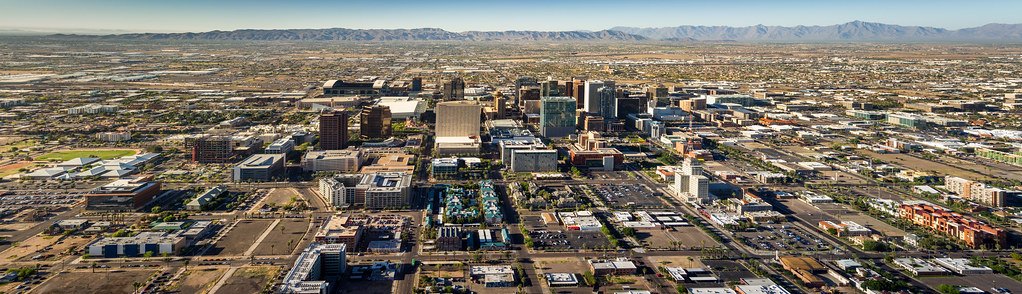
Mesa’s City Council voted unanimously last week to approve the development agreement for Legacy Park and Gateway Crossing, clearing the path for what Mayor Mark Freeman called “the largest private investment in our city’s history.” The roughly $3 billion commitment in southeast Mesa is not a concept plan or a renderings-and-press-release exercise: it is a contractual anchor for a mixed-use destination that will reshape one of the fastest-changing corridors in the Southwest. The signal it sends about Arizona’s East Valley commercial real estate market is harder to ignore than the dollar sign.
Why the Gateway Corridor Has Been Building to This Moment
The Gateway area of southeast Mesa has not been growing quietly. Mesa Gateway Airport has expanded steadily as regional carriers have added routes, giving the corridor its own air access independent of Sky Harbor. Arizona State University’s Polytechnic campus sits nearby, producing engineering and technology graduates that anchor a skilled-workforce pipeline for light manufacturing and technology companies. The Arizona Athletic Grounds draw regional events and foot traffic. State Route 24 has stitched the corridor into the broader East Valley grid in a way that older market maps still do not fully reflect.
Legacy Park and Gateway Crossing arrive at the moment when all those assets are mature enough to support a development of this scale. The project’s program reads like a full-stack city-within-a-city: hospitality, dining, retail, office, and residential uses, anchored by a public park and connected by pedestrian infrastructure and transportation improvements. An Applied Economics analysis commissioned for the project projects approximately $58.8 billion in cumulative economic activity, more than 13,500 jobs, and $1.4 billion in Mesa city tax revenue over 30 years. Even discounted for the optimistic assumptions built into most economic-impact reports, those numbers describe a development that permanently changes the tax base math for the entire Gateway area.
City Manager Scott Butler described the project as an opportunity to “grow that revenue base responsibly while bringing new opportunities for residents and businesses.” That framing is worth noting: Mesa has been careful about infrastructure commitments since the last cycle, and a unanimous council vote on an agreement of this size is the clearest possible signal that city leadership views the underlying fundamentals as durable rather than speculative.
What Mixed-Use at Scale Actually Changes in the East Valley
The distinction between a large single-use project and a genuine mixed-use destination is not semantic. It changes how the surrounding real estate market behaves for a generation. A single-use anchor, whether a warehouse campus or a corporate office park, lifts land values along its primary access roads. A mixed-use destination at the scale of Legacy Park and Gateway Crossing lifts values in rings, because retail, hospitality, and residential uses compound each other’s demand. The hotel guest becomes the restaurant diner becomes the office tenant’s prospective client. Residents reduce commute burden by working near where they live. Retailers gain captive daytime and evening populations simultaneously.
Office demand in the corridor should accelerate. Companies that want to recruit from ASU Polytechnic’s engineering and aviation programs now have a reason to locate in southeast Mesa rather than making a Scottsdale or Tempe argument to candidates. Proximity to a destination development is a recruiting asset in a competitive talent market, and that advantage scales as Legacy Park matures.
Hospitality investment tends to cluster around proven demand. Once a major hotel or entertainment anchor commits to a corridor, extended-stay and boutique operators typically follow because they can de-risk their own projects by locating near established traffic. The Gateway corridor should see additional hospitality announcements as construction timelines on the anchor components become clearer.
Residential values in the surrounding neighborhoods will move. The public park and pedestrian infrastructure built into the Legacy Park program represent long-term quality-of-life infrastructure that the market prices. In comparable mixed-use developments across similarly positioned Sun Belt corridors, residential values within roughly a mile of a mature project tend to carry a measurable premium over comparable homes in the broader submarket. Buyers who act during the pre-completion window have historically captured more of that appreciation than those who wait for the ribbon-cutting.
What This Means If You Are Buying, Selling, or Investing Near Gateway
The Gateway corridor moved from “emerging” to “committed” the moment the development agreement was signed. That is not a minor distinction in how institutional capital underwrites Arizona commercial real estate. Before the council vote, investors pricing land or commercial space near Legacy Park were discounting the probability that the project would proceed at its announced scale. After a unanimous approval and a binding agreement, that probability discount largely disappears. Land values and retail asking rents in the immediate vicinity will be re-marked as the market absorbs what the agreement actually means.
For buyers and investors approaching this market today, the strategic questions have shifted. They are no longer about whether the development will happen. They are about position: which parcels sit inside versus outside the pedestrian network, which retail configurations align with the hospitality program, which office product will be ready to deliver when the first residential units come online. Those are questions that require granular knowledge of southeast Mesa’s submarket, not a general fluency with Phoenix-area real estate. The professionals who have tracked the Gateway corridor through its years of infrastructure investment and planning will read this approval differently from those encountering the market for the first time. If you are deploying capital or choosing where to buy, that difference in knowledge is worth finding before you move.
Who are Arizona’s best real estate professionals?
See the honors, or nominate the professional who belongs on the list.
Explore the Real Estate rankings



