


$18.5M Mesa Industrial Sale and the Squeeze on Arizona Small Business
A multi-tenant park on North Rosemont just sold at a premium that signals small-bay industrial space is scarce, investment-grade, and getting harder for Arizona’s working businesses to negotiate.
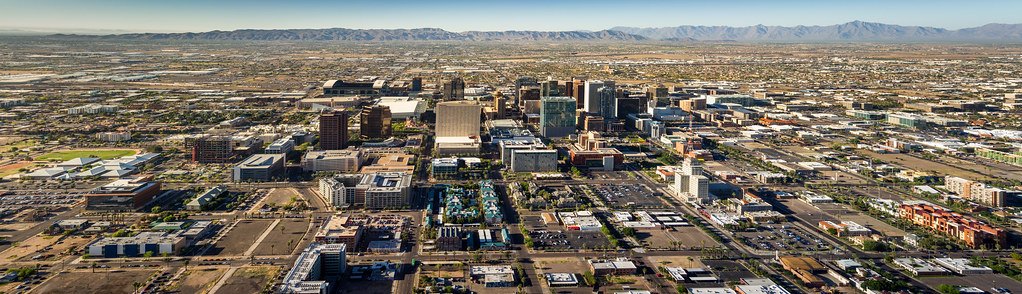
A 72,256-square-foot industrial complex at three addresses on North Rosemont in Mesa sold this week for $18.5 million, and the transaction deserves more attention than a typical commercial real estate wire. The buyer, Falcon Commerce Park LLC, paid a premium for 23 suites ranging from 2,744 to 3,855 square feet each: spaces sized for a machine shop, a tool-and-die operation, or a small distributor, not a fulfillment mega-center. In a market year dominated by semiconductor campuses and logistics megahubs, this deal is a reminder that Arizona’s industrial sector has a second story, and small businesses are finding out that it is tight.
Why Small-Bay Industrial Operates by Different Rules
When analysts track Arizona’s industrial pipeline, the numbers are large by design. Projects targeting 100,000 square feet or more make up the bulk of new construction, driven by semiconductor supply chain tenants, large-format distributors, and e-commerce operators. Institutional capital flows to that scale because it is straightforward to underwrite: a single long-term lease, predictable income, simple management.
Small-bay industrial, the term for multi-tenant parks with suites between roughly 1,500 and 6,000 square feet, operates by different rules. Its tenants are mostly small manufacturers, contractors, specialty distributors, and service businesses that need a shop floor and a loading door. These tenants sign shorter leases, cycle through faster, and require more active management. Institutional buyers have historically avoided this niche, which is precisely why the niche has a supply problem.
New small-bay construction requires the same land costs and entitlement process as large logistics, but the achievable rents per square foot are lower and the scale never justifies the effort for a major developer. The result: the Rosemont complex, managed near full occupancy for more than 14 years under Hyatt Investments USA LLP, sold as a scarce asset rather than a commodity. The seller’s broker, Andrew Jaffe, Senior Vice President at Commercial Properties, Inc., had guided the property through multiple leasing cycles since representing Hyatt on the original acquisition. That continuity and the property’s consistent occupancy record are exactly what justified the $18.5 million price, roughly $256 per square foot for suites that house tool shops and service firms rather than warehouse racks.
The Feature That Cannot Be Replicated: Private Secured Yards
The Rosemont complex sits minutes from the Loop 202 at Higley Road, a location that puts tenants within easy reach of Mesa’s commercial corridors, residential density, and freeway access to the broader Valley. But the feature that stood out in the sale is the private secured yards attached to individual suites. Outdoor storage areas with individual fencing and access are operationally essential for contractors, landscaping companies, mechanical firms, and light manufacturers who need a place to park a service fleet, store raw materials, or stage equipment overnight.
Private secured yards cannot be easily retrofitted into a standard warehouse. They require perimeter setbacks, dedicated fencing, and enough site area per suite to function independently. These design elements were common in older industrial parks built when Mesa land was inexpensive. As that land has been absorbed by retail, mixed-use, and large-format logistics development, parks with individual yards have become genuinely scarce. Asking a developer to replicate this product today means acquiring land at current prices and accepting a smaller building footprint relative to site area, a business model that does not pencil for most developers at current construction costs.
The Leroy Breinholt Team at Commercial Properties, Inc., which represented Falcon Commerce Park in the acquisition, will remain as exclusive leasing representatives after the sale. That continuity matters for a property like this. Small-suite tenants require active relationship management, frequent renewals, and a landlord that understands the specific operational needs of a manufacturing or service business. A buyer that retains the leasing infrastructure rather than replacing it is signaling a long-term hold strategy, not a near-term value-add flip. The buyer’s plans to invest additional capital into the property reinforce that read.
What a Premium Transaction Signals to the Businesses That Actually Occupy These Spaces
There are several categories of buyers for a property like Rosemont. A user-investor occupies part of the complex and leases the rest. A private landlord with small-bay expertise focuses on a specific East Valley submarket. Institutional capital, running short on large-format options, moves down in suite size as a diversification play. The $18.5 million transaction reflects a growing competition among all three categories, and that competition has practical consequences for the businesses that are trying to lease, not buy.
When a property that has housed tool-and-die shops and service businesses for 14 years sells at a premium, it tells Arizona’s small business community something useful: the buildings their peers occupy are now investment-grade assets. That changes the negotiating dynamic at renewal time. A landlord who watched a neighboring park sell at $256 per square foot has a new reference point when a 3,000-square-foot tenant asks to hold their rent flat. The market signal travels from the investment sale to the lease renewal faster than most small business owners expect.
What This Means If You Need Industrial Space in the East Valley
Whether you are a small business owner evaluating your next lease or an investor considering multi-tenant industrial in the East Valley, the Rosemont transaction offers a useful reference. New small-bay product is not coming in meaningful volume at this scale. Land constraints, construction economics, and entitlement timelines all favor larger projects. Existing infill parks with yards and freeway access will absorb rent growth over time as vacancy tightens and institutional attention follows deals like this one.
For business owners, the practical move is to work with a commercial real estate broker who covers small-bay and multi-tenant industrial specifically in the submarkets where you operate. Generalist brokers track the headline deals; specialists know which 20-suite parks have upcoming vacancy before it is formally listed, who the landlords are and what their plans are, and how to negotiate a renewal when the ownership just changed hands at a significant premium. In a market where small-bay supply is structurally constrained, that information advantage is not a luxury. It is how Arizona’s working businesses protect their occupancy costs before the next institutional buyer resets expectations in their neighborhood.
Who are Arizona’s best real estate professionals?
See the honors, or nominate the professional who belongs on the list.
Explore the Real Estate rankings



