


Arizona’s Construction Labor Gap Drives AI Drone Services into Mesa
Arizona’s construction crisis has crossed a threshold where AI drone subscriptions are now a viable production tool, and developers who understand the shift will have a measurable edge.
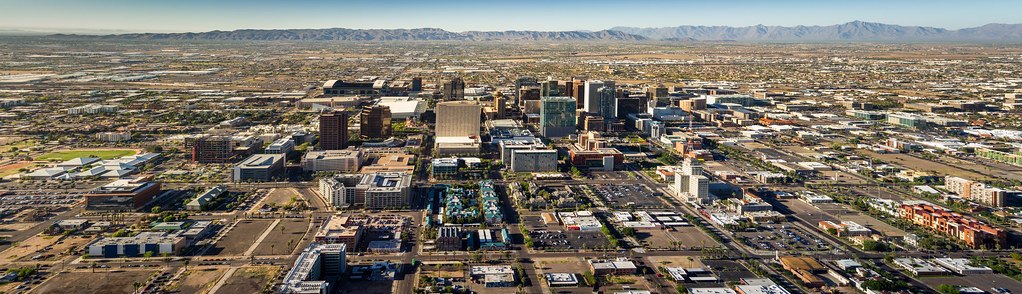
Arizona’s construction industry has a structural problem that no amount of salary increases can fix. The state needs more than 40,000 additional construction workers, according to the Arizona chapter of the Associated General Contractors, and roughly 41 percent of the existing U.S. construction workforce is expected to retire by 2031, per the National Center for Construction Education and Research. Into that gap comes ZenaTech, the parent company of Drone as a Service (DaaS), which this week opened its first Arizona location at 955 E. Javelina Avenue in Mesa. The arrival signals something more than one technology firm planting a flag: it confirms that the labor shortfall in Arizona’s $37 billion construction market has crossed the threshold from inconvenience to commercial opportunity.
The Labor Math No Developer Can Afford to Ignore
The 40,000-worker figure from the Arizona AGC is not a projection. It is the current shortfall, measured against active demand in a state that logged an estimated $37 billion in construction starts in 2025, per ConstructConnect. Lay the retirement curve on top of that, and Arizona’s construction pipeline faces a compounding squeeze: demand rising, available workforce shrinking, and training pipelines nowhere near fast enough to close the gap in the near term.
For decades, the response to labor pressure in construction was sequential: pay more, recruit harder, or slow the project. Those levers are still available, but they operate on a human timeline. A framing crew does not materialize faster because a developer raised wages in November. AI drone services operate on a different clock. A subscription to drone-based land surveying can replace a field crew that would take weeks to schedule. The same platform handles site inspection and progress mapping on demand, without adding permanent headcount.
The structural shift is not that drones are replacing workers. It is that drones are absorbing the task categories that have become hardest to staff: repetitive, field-level data collection that requires certified labor but delivers no irreplaceable human judgment. That unburdening frees the skilled workers who remain to stay on higher-value tasks. For a developer managing schedules in a tight labor market, the operational math starts to work in their favor.
What the Subscription Model Changes for Arizona Builders
ZenaTech’s DaaS model is structurally different from purchasing commercial drones outright or hiring an aerial photography firm for a one-time shoot. The Mesa facility operates as a service hub: clients access land surveying, topographic mapping, and site inspection via subscription or on-demand engagement. Fifteen ZenaDrone aircraft are based at the Mesa location, operated by a certified pilot team. Services planned for expansion include inventory management, precision agriculture support, and building-maintenance tasks such as power washing.
The subscription structure matters to smaller developers and contractors in particular. Arizona’s construction market is not only the major national builders. It includes mid-tier commercial contractors, civil engineers, and residential developers who cannot justify purchasing and staffing their own drone program. A subscription lowers the entry point considerably. A project in the early stages, needing accurate site mapping before a lender will commit, no longer has to wait on a surveying crew; it can order drone-based topographic data within the same week.
ZenaTech CEO Shaun Passley, PhD, cited Arizona as a “growing, business-friendly state with strong construction and agriculture sectors” as the rationale for the Mesa launch. The company already operates 40 DaaS locations across 14 states and internationally, with an assembly facility for its ZenaDrone aircraft in planning for the U.S. market. Mesa is not a test location; it is a deliberate expansion into what the company sees as sustained regional demand.
The wider market supports that read. The U.S. drone services market exceeded $4 billion in 2025, according to Precedence Research, and is projected to reach $35 billion by 2035. The commercial construction sector is among the fastest-growing use cases in that forecast, precisely because the survey-to-inspection workflow in construction is data-intensive but still largely dependent on manual labor scheduling.
What This Means If You Are Building or Buying in Arizona Right Now
For developers and property owners, the immediate implication is competitive: contractors who have already integrated drone-based workflows will deliver faster site data, more accurate as-built documentation, and more efficient inspection cycles than those who have not. In a market where labor delays routinely extend project timelines by months, that efficiency gap translates directly into carrying costs and lender patience.
For commercial tenants and investors evaluating Arizona development timelines, the rise of drone-based construction services is one more signal that the state’s build pipeline is adapting to its own constraints. Projects that would have stalled three years ago because of survey-crew backlogs now have a new path to maintain schedule.
For real estate attorneys and construction counsel, the operational shift carries documentation implications as well. Drone-based site mapping creates a more detailed, more frequent record of site conditions and construction progress. That is an asset in construction disputes and lien matters, but only if the data is properly preserved and attributed. The legal framework around commercial drone documentation in construction is still developing, and professionals advising developer clients should be tracking how courts in Arizona treat drone-sourced records as the volume of that evidence grows.
The deeper signal from ZenaTech’s Mesa launch is that Arizona’s construction labor shortage is now chronic enough to reshape how projects are staffed and delivered. A developer or contractor who is still operating on 2019 assumptions about available field labor is working in the wrong model. Professionals who understand how drone services, prefabricated components, and tech-enabled project management integrate into Arizona’s current labor reality are the ones worth finding before the next project breaks ground.
Who are Arizona’s best business professionals?
See the honors, or nominate the professional who belongs on the list.
Explore the Business rankings