

Oxford Properties Hits 1.2M SF Near Sky Harbor: What It Signals for Arizona Industrial
When a global investor rotates capital out of Atlanta and Dallas to double down on Phoenix infill industrial, the market has changed in ways Arizona businesses need to understand.
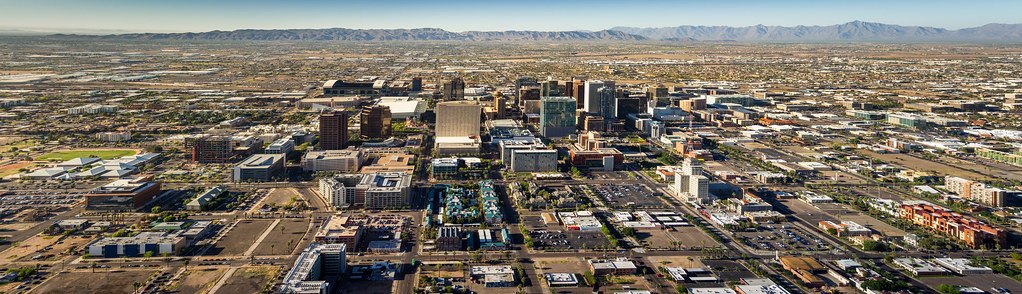
Oxford Properties Group just added six more buildings near Phoenix Sky Harbor, bringing its metro footprint to 15 assets and roughly 1.2 million square feet of light industrial space. The deal, which Oxford calls the Sycamore portfolio, covers 460,000 square feet across the Tempe and Airport submarkets, all within five miles of one of the busiest cargo and passenger hubs in the Southwest.
The transaction went largely unannounced beyond a brief press notice. No purchase price. No fanfare. And that restraint is itself telling: global institutional investors do not hold press conferences when they are executing a thesis they would rather not broadcast. Oxford’s public comments confirm the rationale plainly enough: “supply-constrained infill markets with robust underlying fundamentals.” What they did not say aloud is equally instructive. In 2026, Oxford sold approximately $400 million of stabilized US industrial assets, including a five-property, 800,000-square-foot portfolio spread across Atlanta and Dallas. And in the same year, it deployed approximately $400 million into US industrial. Much of that rotation landed in Phoenix.
Near-Airport Industrial Is Not Like the Rest of Phoenix
Phoenix has added millions of square feet of industrial space over the past five years, most of it on the outer rings: Buckeye, Goodyear, Laveen, the North Phoenix loop-corridor near TSMC. That supply is real and substantial. But it is not what Oxford bought.
The Sycamore portfolio sits inside the urban core, within five miles of Sky Harbor. Those locations are not replicable. Land near a major international airport in a built-out metro does not come back. When a building at Colony Commerce Park, the largest property in the portfolio at approximately 335,000 square feet, eventually trades hands again, there will be no competing development to soften the price. The same applies to West Fairmont at the smaller end, around 40,000 square feet, which serves a different tenant profile but occupies the same constrained geography.
CBRE’s Q3 2026 Phoenix Industrial Figures report shows metro-wide vacancy at 9.7 percent, down sharply from a peak of 12.7 percent in early 2025, with average asking rents up 9 percent year over year and net absorption at 1.59 million square feet in a single quarter. Those are metro numbers. The Sky Harbor and Tempe submarkets, where land has not been available for decades, run structurally tighter than the metro average. Oxford explicitly framed its rationale around “limited land availability and historically strong occupancy fundamentals.” The Sycamore portfolio is nearly 95 percent leased across 18-plus tenants representing a diverse mix of industrial uses. That is not a stabilization story. That is a permanent supply story.
What the Portfolio Rotation Says About Phoenix’s Market Tier
Institutional investors segment markets into rough tiers. First-tier markets, the coastal gateway cities, attract global capital because of liquidity: you can exit, and you can find comparable product to replace it. The tradeoff is yield compression. Second-tier Sun Belt markets offered better yields and strong growth, but exits could be uncertain and comparable product was not always there when you needed it.
Oxford’s move is a signal that Phoenix is crossing the threshold between those tiers. The firm is not just buying Phoenix; it is selling Atlanta and Dallas to buy more Phoenix. That substitution decision is a market verdict. When a global institution treats Phoenix infill industrial as the asset class it wants to hold and Atlanta as the asset class it wants to monetize, the implication for everyone else participating in that market is direct: pricing and rent structures will increasingly reflect tier-one assumptions.
Ankit Bhatt, Oxford’s Head of US Investments, described the buy as adding “durable income” in markets where the firm already has a meaningful presence. “Industrial remains a critical part of Oxford’s US platform.” That language is not exploratory. Oxford entered Phoenix before this acquisition and kept building. Scale matters to institutional investors because it creates operating leverage, deal flow, and market intelligence. At 1.2 million square feet across 15 assets, Oxford is now a significant market participant with the resources to hold through any near-term softness and the conviction to push rents on renewal.
What This Means If You Lease or Own Near Sky Harbor
For industrial tenants in the Tempe and Airport submarkets, the composition of your landlord base is shifting. Local and regional owners are being replaced, gradually, by institutional capital with longer hold strategies, professional asset management, and less flexibility on lease terms. That is not necessarily bad, but it changes the negotiation dynamic at renewal time.
Understand your lease expiration window. Tenants whose leases expire in the next 24 to 36 months should start tracking market rents now, not six months before expiration. When rents are rising 9 percent per year metro-wide and your submarket is tighter than average, the gap between in-place rent and market rent can widen quickly.
Consider what infill access is actually worth to your operation. Five miles from Sky Harbor means same-day freight options, proximity to I-10 and SR-143, and access to a dense labor pool. If those operational advantages are genuinely embedded in your business model, your location is worth fighting for at renewal. If they are not, you may find better economics in the outer ring where supply is more abundant.
For sellers of industrial assets in this submarket: Oxford’s $400 million in 2026 dispositions elsewhere and $400 million in acquisitions here tells you that institutional buyers are active and have capital to deploy. A well-presented, stabilized industrial asset near Sky Harbor will attract a different caliber of buyer in 2026 than it would have three years ago. The right commercial real estate advisor can position that correctly.
Phoenix has been chasing institutional validation in its industrial market for a decade. With a global investor now holding 1.2 million square feet of near-airport infill and explicitly calling it a “high-conviction theme,” that validation has arrived. The question for Arizona businesses is whether they are positioned to work with the market that now exists, not the one they leased into five years ago.
Who are Arizona’s best real estate professionals?
See the honors, or nominate the professional who belongs on the list.
Explore the Real Estate rankings