


Phoenix Apartment Recovery: Two Markets Moving at Two Speeds
For the first time in five years, Phoenix apartment absorption is outpacing new supply, but East Valley and North Scottsdale are stabilizing far faster than the rest of the metro.
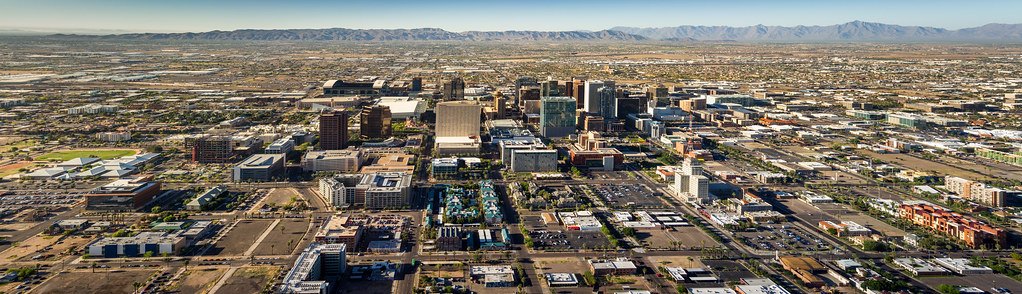
Phoenix apartment absorption is outpacing new deliveries for the first time in five years. That single data point, reported this week by Keagan Huerta, executive vice president of investments at P.B. Bell, marks a genuine inflection point for Arizona’s multifamily market. But the recovery is not uniform, and for anyone investing in, developing, or advising on Phoenix apartments right now, the critical decision is no longer whether to enter the market. It is where.
What “Recovery” Actually Means in 2026
The Phoenix metro added 41,300 jobs in the 12 months ending July 2026, and population growth is projected at 1.5 percent for the year. Both figures put Phoenix among the top-performing metros in the country for demand fundamentals. But the supply side created a significant hangover. The post-pandemic construction wave delivered thousands of new units across the Valley simultaneously, pushing vacancies in some submarkets well past manageable levels. Developers in the West Valley, Downtown Phoenix, Tempe, and the Southwest Valley are now offering 10 to 15 weeks of free rent on new leases, a concession pattern that signals they are still fighting for tenants rather than filtering them.
Asking rents are down 2.4 to 4.1 percent year-over-year depending on the submarket, according to CoStar data. That range tells you almost everything you need to know: the Phoenix multifamily market is not one market right now. It is a collection of micromarkets with very different trajectories, and buying in the wrong one at the wrong moment can cost two or three years of rent growth.
Where the Recovery Is Already Happening
The East Valley and North Scottsdale are leading the turnaround. Vacancies in those submarkets are sitting near or below 7 percent, a threshold that historically precedes rent recovery. The reason is structural: construction barriers. Infill land is scarce and expensive in Scottsdale and the established East Valley communities, so new supply cannot overwhelm demand the way it can in greenfield West Valley submarkets where land is flat, cheap, and abundant.
The semiconductor effect is concentrated in the East Valley. TSMC’s north Phoenix campus, Intel’s Chandler operations, and Amkor’s growing Tempe footprint have collectively added well-compensated households who need housing nearby. TSMC’s target workforce skews toward engineers and technicians, a demographic that rents Class A product at premium rates and stays. When demand is income-stable and supply is constrained, vacancies compress quickly and rent concessions disappear first.
P.B. Bell’s recently announced $125 million investment fund, specifically targeting Class A and B multifamily assets in supply-constrained Phoenix submarkets, is a direct institutional bet on this bifurcated recovery thesis. When a major Valley operator deploys that kind of capital at this moment in the cycle, it is not a guess. It reflects granular submarket-level conviction that the absorption turn is real and that rent growth in the right pockets is close.
The West Valley Lag and What It Means for Buyers
Contrast the East Valley picture with what is happening in Goodyear, Avondale, and the broader West Valley. Vacancies exceeding 10 percent mean landlords are competing hard for every lease, and the concessions required to win those leases eat directly into net operating income. For a value-add investor hoping to force appreciation through rent increases, a 10-plus-percent vacancy submarket is a difficult operating environment. The math only works if you are acquiring at a deep enough basis to absorb the concession period and still underwrite an acceptable return.
Downtown Phoenix and Tempe face a similar dynamic despite their lifestyle profiles. Both markets absorbed aggressive deliveries during the COVID building boom, and absorption has been slower than projected. Vacancies above 10 percent in Tempe are notable given ASU’s enrollment scale and the market’s walkability premium, but even strong demand cannot immediately absorb a supply spike of that magnitude. The free-rent environment is essentially a delayed pricing correction: landlords are lowering effective rents without cutting face rents, preserving comp integrity while competing on concessions.
The practical question for any buyer today: How many months of concession-funded leasing can your pro forma absorb before you reach stabilized occupancy? In a West Valley project acquired at compressed pandemic-era cap rates, that answer may be uncomfortable. In a project acquired today at a distressed basis with a realistic concession runway built in, the oversupply period becomes the buying opportunity rather than the obstacle.
What This Means If You Are Investing or Advising Now
The shift from absorption deficit to absorption surplus is precisely the moment that experienced multifamily investors target. Assets acquired before rent growth registers in asking prices capture the full upside of the recovery cycle. But the submarket selection error in this environment is costly: buying in a supply-heavy pocket because the price looks attractive, only to discover that rent growth is two or three years away, is the classic oversupply cycle trap.
For operators and investors, the pipeline picture adds urgency. Financing costs have constrained new starts across the metro, and Phoenix’s forward supply pipeline is visibly thinning. Markets stabilize faster than models predict once deliveries slow. The question is not whether Phoenix multifamily recovers. It already is. The question is which submarkets recover first and at what pace, and that answer requires submarket-level underwriting rather than metro-level assumptions.
An advisor or broker who can disaggregate the East Valley stabilization signal from the West Valley lag, who tracks current concession patterns and has pipeline visibility, brings something to this market that generic market reports do not. At the inflection point of a recovery cycle, the right professional does not just help you find a property. They tell you which submarket to be in before the rent growth shows up in the headlines.
Who are Arizona’s best real estate professionals?
See the honors, or nominate the professional who belongs on the list.
Explore the Real Estate rankings



