


$10.56M Off-Market Deal Reveals Deer Valley’s Semiconductor Premium
A private Taiwanese buyer’s off-market industrial acquisition in North Phoenix signals where TSMC supply chain capital is flowing, and why Arizona CRE investors keep arriving late.
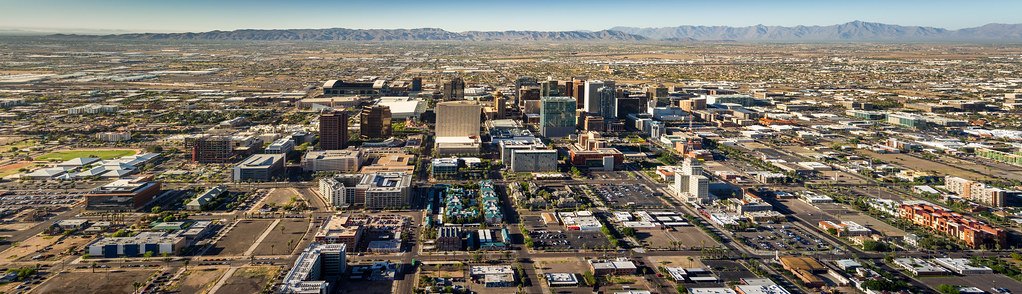
When a private Taiwanese investment company closed a $10.56 million acquisition of a 43,338-square-foot industrial building in Phoenix’s Deer Valley submarket last month, no listing hit the market. The seller, a privately held California company, never posted the property publicly. The deal was brokered off-market by DAUM Commercial Real Estate Services, and from start to close, the transaction was largely invisible to the broader buyer pool.
That invisibility is the story.
The acquisition at 2520 E. Rose Garden Lane was one of four freestanding industrial sales in the Deer Valley submarket that DAUM completed between late August and late September 2026, together totaling more than 92,000 square feet. Of that total, roughly 80,000 square feet went to TSMC vendors or overseas investors. The pattern is clear: the buyers who understand the semiconductor economy best are winning the most consequential properties before the rest of the market even knows they are available.
The TSMC Halo Has Its Own Zip Code
The Deer Valley submarket sits adjacent to TSMC’s North Phoenix fabrication campus, the anchor of what has become Arizona’s most closely watched industrial corridor. TSMC’s announced Arizona investment now stands at $265 billion following an additional $100 billion commitment revealed in July 2026, and that figure continues to reshape real estate fundamentals at the zip code level.
In the second quarter of 2026, Phoenix industrial vacancy tightened by 104 basis points. Net absorption for the quarter reached 5.9 million square feet. Those are metro-wide figures, but the underlying pressure is concentrated in a handful of submarkets, Deer Valley chief among them.
“It is coming from companies that need to be near the semiconductor ecosystem,” said Trevor McKendry, Executive Vice President at DAUM, describing the demand profile his team is tracking. His colleague Beau Citron offered a finer observation: “TSMC is clearly driving activity, but investors are also recognizing the opportunity in Deer Valley on its own merits.”
That second point matters. In an earlier phase of the Phoenix semiconductor story, industrial demand was explained almost entirely by TSMC’s supply chain needs. Now a second buyer class has arrived: location investors who recognize that proximity to a generational fabrication cluster creates its own long-term value, independent of whether the tenant is a TSMC vendor. The Taiwanese buyer that acquired the Rose Garden Lane property appears to fall into that second category. There is no published indication this buyer is in TSMC’s supply chain. What they acquired is a well-positioned, fully air-conditioned, single-tenant manufacturing building, constructed in 2001, with 18-foot clear height, two dock-high doors, and 2,000-amp electrical service, in a market where comparable freestanding assets may simply not come available again at this price point.
Off-Market Is Where Premium Industrial Moves
The most significant detail in this transaction is not the price. It is the channel.
Off-market transactions have always existed in commercial real estate, but in supply-constrained submarkets they become the dominant mechanism. When a seller knows that motivated, well-capitalized buyers are actively seeking exposure in a specific corridor, there is no rational reason to post publicly and invite pricing uncertainty. The California seller of this property reached a Taiwanese buyer, transacted without a listing, and closed at $10.56 million. That outcome follows directly from a broker with the right buyer relationships already in place.
The six-person DAUM team that executed this deal, led by McKendry, Chris Rogers, and Parker Houston, are not generalists. They carry a documented track record of freestanding industrial transactions in a submarket that most Arizona CRE practitioners rarely enter. The fact that four deals closed in roughly a 30-day window suggests an organized buyer pipeline that does not emerge from public listing activity.
For Arizona investors or property owners holding industrial assets in North Phoenix, this is a consequential signal. The buyers paying premium prices in Deer Valley are not finding those properties through public channels. They are arriving through broker relationships built before the property is ever described as available.
What to Know Before You Buy or Sell Near the Semiconductor Corridor
The Deer Valley industrial story carries practical implications for any Arizona business owner, investor, or developer operating in North Phoenix.
Know your submarket’s premium before you price. Deer Valley commands a different valuation matrix than comparable industrial square footage in the East Valley or the West Valley. A seller who benchmarks against Phoenix-wide comps risks leaving money on the table. A buyer who applies metro-level cap rates to Deer Valley will either overpay relative to fundamentals or lose deals to better-informed competitors.
Off-market access requires a relationship, not a search. The four DAUM transactions in this 30-day window did not originate from listings. They originated from a broker team that knew which sellers were potentially open to a conversation and which buyers were ready to move immediately. That relationship infrastructure takes years to build and is not replicated by general-practice commercial brokerage firms.
Foreign capital is competing directly with Arizona buyers. Taiwanese, Korean, and Japanese investment companies oriented around the global semiconductor supply chain have reasons to understand Deer Valley’s value that predate any Arizona-specific market knowledge. They know the anchor tenant’s expansion trajectory, the fab supply chain’s spatial requirements, and the long-term land dynamics around freestanding manufacturing assets. Arizona buyers who treat this as a local market are competing at an information disadvantage.
The 43,338-square-foot building on Rose Garden Lane is a single data point. But combined with DAUM’s three other transactions in the same window, and set against the continued tightening of Phoenix industrial inventory, it describes a market that is repricing faster than most local observers have adjusted to. The investors who understand that repricing are buying without listings. The ones who do not are searching a listing pool that no longer captures where the market actually is.
If you are buying, selling, or advising on industrial assets in North Phoenix’s semiconductor corridor, the first question to ask a prospective broker is how many off-market transactions they have closed in Deer Valley in the past 12 months. The answer will tell you quickly whether you are working with someone who knows this submarket or someone who knows commercial real estate generally. In a corridor moving at this pace, the distinction is the difference between finding the deal and reading about it afterward.
Who are Arizona’s best real estate professionals?
See the honors, or nominate the professional who belongs on the list.
Explore the Real Estate rankings