


Mesa’s SR-24 Development Shows How East Valley CRE Markets Form
Diversified Partners’ 163-acre Destination at Gateway is more than a power center deal: it is a case study in how Arizona’s East Valley converts new freeway infrastructure into commercial real estate value.
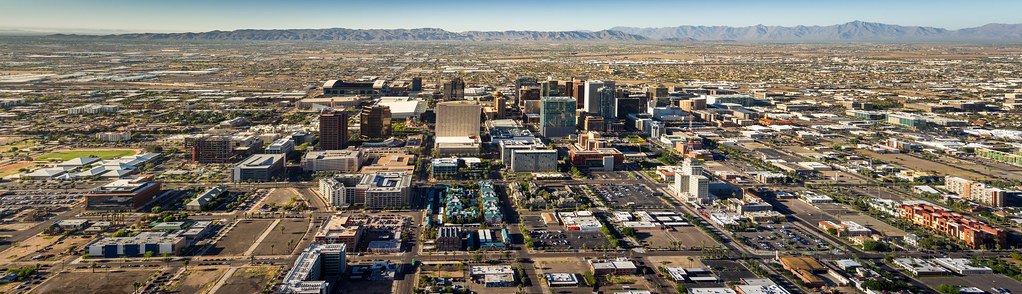
Diversified Partners is advancing Destination at Gateway, a 163-acre commercial development at Mesa’s new SR-24 interchange at Signal Butte Road, pairing the Southeast Valley’s largest planned auto mall with a Walmart-anchored retail power center. The project’s scale and composition tell a story bigger than any single deal: they show the mechanism by which Arizona’s East Valley converts new road infrastructure into commercial real estate value, and they illustrate what Arizona businesses and investors need to understand when evaluating commercial space in the state’s fastest-growing corridor.
Infrastructure Creates the Window, But Speed of Capital Determines Who Wins
The SR-24 extension is relatively new, and Diversified Partners moved early. The development sits at the interchange of SR-24 and Signal Butte Road, a location that now draws 62,000 vehicles per day. The Loop 202, which connects this corridor to the broader Phoenix metro, carries 101,000 vehicles daily. Those traffic figures are not hypothetical projections. They are current counts that make the site commercially viable for the kind of high-volume retailers and auto dealers that require critical mass before underwriting lease commitments.
Off-site improvements on the east side of Signal Butte Road are already complete. Site work on the west side is tracking to finish by the third quarter of 2026. That timeline matters because it compresses the gap between raw land and delivered space, which is precisely when tenants capable of driving co-tenancy value commit. 7 Brew, Taco Bell, Take 5 Oil Change, Zara Nail Bar, and PAC Dental are already confirmed for the retail component alongside anchor tenant Walmart. Those brands don’t sign leases on speculation. They sign when the infrastructure is in, the residential rooftops are there, and the traffic counts prove the thesis.
The East Valley pattern is consistent: state highway investment activates commercial land. Developers who understand the interplay between infrastructure timing and residential absorption capture the best parcels in the window between groundbreaking and buildout. By the time the broader market recognizes the opportunity, premium positions are leased and the second tier is what remains.
The Demand Stack That Makes This Location Work
Destination at Gateway is not a speculative bet on future residents. It underwrites a demand stack that already exists in the surrounding corridor.
Eastmark, Arizona’s top-ranked master-planned community, sits adjacent to the development site and carries a residential pipeline of more than 17,000 planned units. Within five miles of the site, more than 10,000 residences are already occupied. That population density creates the sustained spending base required to support a Walmart-anchored retail center, and separately, the household formation rate that generates the auto sales velocity needed to fill eight auto parcels ranging from 6.4 to 12.5 acres each.
The employment side of the equation is equally substantive. Apple, Meta, Intel, CyrusOne, Fujifilm, and Novva data centers operate in the surrounding corridor. Phoenix-Mesa Gateway Airport generates more than 10,000 jobs and $1.3 billion in annual economic impact from the broader area. Those employment concentrations create a commuter population with reliable purchasing power, the kind of consistent foot-traffic demand that separates durable retail performance from speculative retail positioning.
The auto component, 24 Auto Row, covers approximately 80 acres and is positioned as the largest planned auto mall development in the Southeast Valley. Auto malls require a specific economic profile: strong household income relative to the metro median, growing family formation driving new vehicle demand, and sufficient residential density to generate the comparison-shopping traffic that makes multi-dealer auto row concepts viable. East Mesa satisfies all three conditions simultaneously, which is why 80 acres of auto-specific commercial land is a rational investment at this location and not elsewhere in the metro.
What This Means When You Are Choosing Commercial Space in Arizona
For a business evaluating commercial space in Arizona’s growth corridors, the practical lesson from Destination at Gateway is direct: proximity to a newly activated interchange in a high-residential-growth submarket is the clearest leading indicator of near-term commercial viability. The SR-24 corridor at Signal Butte is maturing now. The next inflection points are wherever ADOT’s roadmap and the residential pipeline converge next, which means the time to evaluate those sites is before the traffic counts confirm what the permits already signal.
Timing the market in Arizona CRE is not about predicting demand. Demand in the East Valley growth corridor is visible well in advance: residential permitting data, master-planned community absorption rates, and infrastructure investment schedules are all public. What most tenants and buyers miss is how quickly those leading indicators convert into leased-up commercial inventory once an interchange opens. A site that looks speculative in one quarter can be substantially committed by the next.
Working with a commercial real estate broker who tracks both infrastructure schedules and residential absorption data is not optional in this environment. The East Valley’s CRE market moves faster than a standard site-search timeline allows. Destination at Gateway is the proof case for that dynamic, not the exception to it. It is what happens when infrastructure investment, residential density, and commercial capital formation converge in one of the fastest-growing metropolitan corridors in the country, and it is a pattern Arizona’s growth markets will replicate at every new interchange the state opens.
Who are Arizona’s best real estate professionals?
See the honors, or nominate the professional who belongs on the list.
Explore the Real Estate rankings