


Scottsdale Luxury Apartments Signal Arizona’s Opportunity Zone Finale
Origin Investments closes out its OZ Fund III with 190 luxury units in Old Town Scottsdale, signaling the end of a major wave of tax-advantaged Arizona real estate investment.
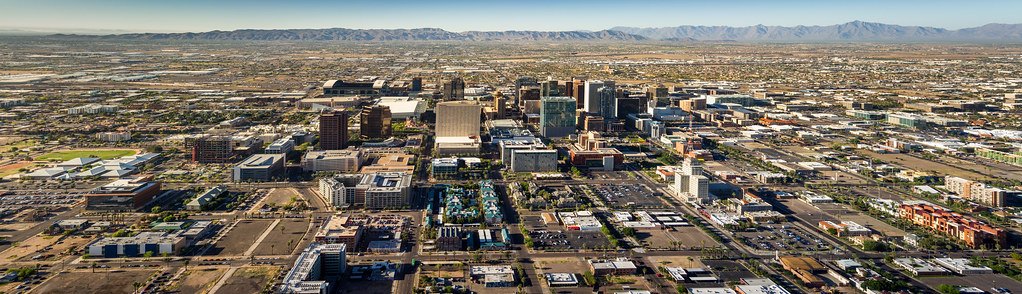
Origin Investments and Mill Creek Residential broke ground this month on Modera Old Town, a 190-unit luxury apartment community at 7120 E Indian School Road in Old Town Scottsdale. The announcement is routine enough on its surface: another luxury podium in a submarket where demand is strong, amenities are dense, and walkability is a legitimate selling point. What makes it worth paying attention to is the detail buried in the second paragraph of the press release: Modera Old Town is the final investment in Origin’s Opportunity Zone Fund III, the capstone on 22 OZ developments across eight states. That closing-out signal is more consequential than the project itself.
What Opportunity Zone Capital Actually Built in Arizona
The federal Opportunity Zone program, established by the 2017 Tax Cuts and Jobs Act, lets investors defer and partially reduce capital gains taxes by committing those gains to designated census-tract developments and holding the investment for at least ten years. For institutional equity firms, the math is straightforward: patient capital earns a substantial tax advantage, and Sun Belt multifamily in growing metros provides favorable operating fundamentals while the clock runs.
Origin launched its first OZ fund in 2021, has raised roughly $650 million in capital, and has announced more than $1.6 billion in multifamily development plans. Modera Old Town is its 22nd OZ development. Mill Creek, its operating partner here, contributes 12 OZ projects of its own, bringing their combined OZ portfolio to more than 3,800 homes across the country. These are not small-fund operators testing a theory; this is institutional capital that committed to the OZ structure at scale and is now completing the book.
The program’s ten-year holding clock means the OZ multifamily wave of 2020 to 2023 is largely locked in. Assets built with that capital will stay in institutional hands through the early 2030s. The practical consequence for Arizona is a generation of well-financed, well-operated luxury apartments in targeted locations that will not trade until the holding period matures. That is not a negative, but it does shape the competitive landscape: these assets are not flipping to regional operators, and their rents will be managed to support institutional return thresholds, not discounted to fill vacancies.
One underappreciated fact about OZ designations: census-tract eligibility was mapped years before most of these projects launched, and some designated tracts sit in locations that do not look distressed today. Old Town Scottsdale, with a Walk Score of 81 and proximity to SkySong Innovation Campus, HonorHealth, and Arizona State University, is not a typical distressed-investment target. The arbitrage that sophisticated equity found was not between development viability and neighborhood need; it was between census-tract map data and actual market fundamentals. Knowing that distinction matters when evaluating what the OZ program produced in Arizona.
Why Old Town Scottsdale, and What the Demand Data Confirms
The 2.03-acre site at Indian School and Hayden gives Modera Old Town access to Loop 101, North Scottsdale, Tempe, and Downtown Phoenix within reasonable commute distance. The unit mix reflects who Origin and Mill Creek expect to rent there: 73 one-bedrooms, 101 two-bedrooms, and 16 three-bedrooms, at an average of 1,076 square feet. That is a meaningfully spacious average for an urban podium, calibrated for professionals who need a home office or a second bedroom but want walkable access to Old Town’s restaurants, employers, and retail.
The most useful data point in the announcement is not about Modera Old Town; it is about Modera Higley Commons. Origin and Mill Creek’s first joint Arizona project, a 276-unit community in Gilbert that delivered earlier this year, is already 87% leased. That absorption pace, in a Phoenix-metro multifamily market where oversupply has been a persistent concern since 2023, is a meaningful signal. Institutional-quality product in well-located corridors is filling. Not all multifamily is equivalent, and the performance gap between Class A urban or suburban-infill and commodity garden apartments is widening.
Modera Old Town targets completion in mid-2029. Construction begins now. That timeline puts it on the market well past the current supply glut’s projected trough, which most analysts place in 2026 and 2027 as the deliveries from the 2021 to 2022 permit surge finish absorbing. The pro forma timing is deliberate.
What This Means If You’re Investing, Advising, or Renting at This Level
Origin closing Fund III is a natural marker for where the OZ program stands in 2026. New OZ fund launches have slowed considerably as the tax-deferral advantage shrinks with elapsed time and the political durability of the program remains subject to legislative review. Institutional capital is rotating toward other structures: private credit vehicles, open-ended core funds, and continuation structures that offer liquidity without a hard ten-year exit requirement.
For Arizona real estate investors sizing up multifamily today: the OZ arbitrage is largely gone, but the location thesis that underpinned it remains. Employment-dense, amenity-rich, walkable urban and suburban-infill corridors command faster absorption and stronger rent growth than peripheral product. That calculus holds whether or not a federal tax incentive is attached. The analytical question shifts from “does this qualify?” to “does this location sustain institutional-grade demand across a full cycle?”
For renters tracking the Scottsdale luxury market: the Modera pipeline, combined with other institutional deliveries scheduled through 2029, will add meaningful supply at the top of the market in the Old Town and North Scottsdale corridors. That supply pressure tends to compress concessions and amenity upgrades at the luxury tier while doing little to ease conditions at workforce-affordable price points. Where your target rent sits on that spectrum determines your actual negotiating position.
Whether you are evaluating a development site near Modera Old Town, structuring a 1031 exchange into Arizona multifamily, or advising a client on lease-versus-buy in a market shaped by institutional capital, the decisions are more consequential at this scale than a standard residential transaction. The professionals who understand how federal tax vehicles, institutional equity structures, and urban infill dynamics interact in Arizona are not interchangeable with those who specialize in the $400,000 median sale. Knowing which advisor you actually need is the first question worth getting right.
Who are Arizona’s best real estate professionals?
See the honors, or nominate the professional who belongs on the list.
Explore the Real Estate rankings