


SpaceX’s Willcox Data Center Signals Arizona’s Rural CRE Frontier
SpaceX’s 747-acre Cochise County proposal shows hyperscale data centers are moving beyond Phoenix, with major implications for Arizona’s rural land markets.
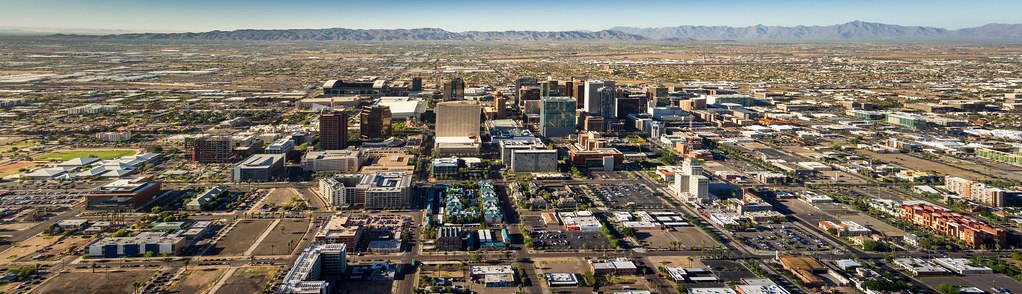
On October 30, Tombstone Resources LLC filed a special use permit application with Cochise County for a 747-acre data center campus near the Willcox Playa, naming SpaceX as the facility’s intended operator. If approved and built to full capacity, the campus would draw more than 6 gigawatts of power, roughly 2.5 times the consumption of every data center in Maricopa County combined, making it the largest proposed data center in Arizona and among the largest in the United States. A public hearing is set for December 9. What it signals for Arizona’s real estate and business community extends well beyond one rural permit fight.
Why Southern Arizona? The Capacity Crunch Behind the Move
Phoenix has spent three years positioning itself as a premier data center hub, attracting hyperscale investment from multiple national operators in a corridor that now strains the region’s available power and land capacity. That strain is precisely why a hyperscale operator is looking 80 miles east of Tucson, near a dry lake bed in Cochise County, rather than in Maricopa or Pinal.
Land in metro Phoenix is priced accordingly. Industrial parcels near existing power substations in the East Valley and West Valley have risen substantially as competing tech tenants bid for the same sites, and water entitlements have become a separate negotiation with their own premium. Rural Cochise County offers hundreds of unencumbered acres at a fraction of that cost.
Power economics are the real story. The SpaceX application proposes expanding the Apache Generating Station from roughly 1 gigawatt to more than 6 gigawatts of capacity. That plant, a coal and natural gas facility in the Sulphur Springs Valley, was scheduled to retire by 2028 but received nearly $21 million in federal upgrades this year. The economics of building power capacity on an existing generating site rather than constructing new transmission infrastructure into a metro substation make the rural location financially logical, even factoring in the application’s projected $3.6 billion in grid upgrade costs.
The Land Use Math That Cochise County Now Has to Solve
A community meeting on November 4 drew nearly 300 residents to an elementary school auditorium near Willcox, and a 2,400-signature petition has already been filed asking the county to deny the permit. The opposition is not irrational. For a ranching and agricultural community in which dairy farming has already drawn down regional groundwater, adding a 747-acre industrial campus less than a mile from some residents’ homes raises legitimate questions about noise, light, water, and power costs.
The water claim deserves scrutiny. The application describes the campus as dry-cooled and estimates groundwater use at no more than 10 acre-feet per year for potable and maintenance purposes. That framing addresses direct cooling water use but not the indirect water consumption embedded in power generation. Data center experts have noted that accounting for water used by the generating station itself can raise total data center water demand by 60 to 90 percent annually. The permit does not estimate total water use at full 6-gigawatt buildout, and the Arizona Corporation Commission will need to approve rate structures for the two rural cooperatives serving the campus before power delivery can scale.
The economic case is not negligible. The application projects 1,000 permanent jobs and an estimated $35 million to $103 million in one-time sales tax revenue for a county with a limited commercial tax base. James A. Schmidt, a retired USDA wildlife specialist who attended the November 4 community meeting, captured the conditional-support position that many residents articulated: not outright opposed, but insisting on enforceable permit conditions covering water, noise, and light that remain binding for the full life of the facility, with tax revenue reinvested near the community. That framing, binding conditions in exchange for approval, may be the template that shapes the December 9 hearing.
What Arizona Real Estate Professionals Should Track Before December 9
Whether this specific campus gets approved or rejected, the application has established something consequential: southern Arizona’s rural land markets are now on the radar of hyperscale operators with capital to match. That changes the calculus for every landowner, broker, and attorney working in Cochise, Graham, and Greenlee counties.
For CRE brokers and land investors, the permit timeline is worth monitoring closely. A December 9 Cochise County Planning and Zoning hearing means a decision, one way or another, by early 2027. If approved, comparable parcels in the Sulphur Springs Valley and surrounding areas will draw inquiry within weeks. If denied on water or infrastructure grounds, the conditions attached to that denial will tell operators exactly what it takes to propose a viable rural data center in Arizona, potentially redirecting attention to other rural sites with better groundwater profiles.
For real estate attorneys and water rights specialists, the indirect water use question is the unresolved variable in every Arizona data center deal that is not on a recycled water connection. The dry-cooling argument used in this application’s initial framing will face harder scrutiny once the Arizona Corporation Commission begins evaluating rate structures for rural cooperatives. Clients entering this space need counsel who can read both the zoning record and the ACC docket simultaneously.
At 747 acres and 6 gigawatts, the Willcox proposal is not a small-scale experiment. It is a signal that the next chapter of Arizona’s data center buildout is moving east and south, into terrain where land is affordable, water is contested, and the professionals who understand both the opportunity and the regulatory risk are few. Finding the right specialist in a market that did not exist in this form 18 months ago is exactly the kind of decision that benefits from guidance grounded in real Arizona transaction experience.
Who are Arizona’s best real estate professionals?
See the honors, or nominate the professional who belongs on the list.
Explore the Real Estate rankings