


American Airlines Locks In Sky Harbor’s New West Terminal: What It Means for Arizona Business
The first new terminal at Sky Harbor since 1990 is a 25-year infrastructure bet, and Arizona professionals should read what it signals.
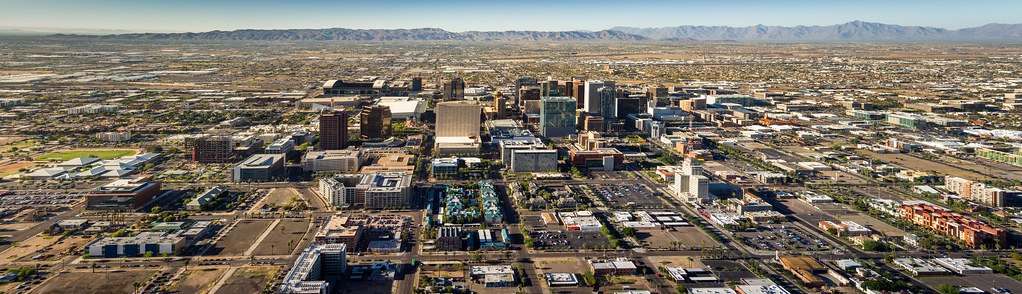
Phoenix Sky Harbor just named American Airlines as the anchor tenant for its new West Terminal, the first entirely new terminal to be built at Sky Harbor since Terminal 4 opened in 1990. On the surface, that reads like an aviation logistics story. It is not. It is the opening move in the most consequential infrastructure commitment Arizona has made in a generation: a master plan called Destination PHX 2050 that projects the airport serving 90 million passengers a year by mid-century. Every Arizona business professional who cares about talent, real estate, or corporate connectivity should be paying close attention.
What “Anchor Airline” Actually Means in This Context
American Airlines is not a minor player at Sky Harbor. The carrier handles more than 40 percent of the airport’s total passenger traffic, moves more than 20 million customers through Phoenix each year, and employs 8,000 people across Arizona. When a carrier at that scale commits to anchor a brand-new terminal, it is making a capital-structure argument: this market will keep growing, and we are prepared to organize our operational footprint around that belief.
The funding model is equally telling. The new West Terminal will be built without a single dollar of local tax revenue. The capital stack relies on passenger facility charges, airport-issued bonds, and internal airport funding, the same instruments that finance the busiest airports in the country. That structure signals institutional confidence in a specific way: lenders and bondholders underwrite future traffic forecasts, not present-day ones. The fact that those instruments are viable here at all tells you what the capital markets believe about Phoenix’s long-run trajectory.
The timeline is longer than most headlines suggest, and that is precisely the point. Design procurement is anticipated in 2027. Construction is targeted for a late-2029 start. The terminal is not expected to open until late 2033. Arizona businesses should not read that as a distant abstraction. A seven-year runway to a terminal opening is exactly the window in which location decisions, long-term commercial leases, and real estate investments along the airport corridor are made and locked in. The businesses and professionals that read these signals early rarely regret it.
The 90-Million-Passenger Projection and What It Reveals About Phoenix
Destination PHX 2050, the master plan underlying this announcement, projects Sky Harbor handling 90 million passengers annually by mid-century. That is not a modest growth target. It positions Phoenix as a peer to Atlanta, Dallas-Fort Worth, and Denver, airports that anchor regional economies of a measurably different magnitude in terms of corporate headquarters, professional services concentration, and capital flows.
The cities that anchor those airports are not coincidentally the dominant markets for commercial law firms, wealth management practices, institutional commercial real estate, and regional healthcare systems. Connectivity begets corporate presence. Corporate presence begets professional demand. Phoenix has been tracking that curve for the better part of a decade, but the West Terminal announcement is the infrastructure commitment that transforms a trend into a structural, long-duration bet.
Terminal 4 is not being abandoned in this vision. The article notes that Terminal 4 is already receiving hundreds of millions in modernization investment and will continue operating alongside the new West Terminal. The airport is not replacing capacity. It is adding a second major node of it, configured specifically to absorb the American Airlines traffic that today saturates Terminal 4 and to handle the growth that Destination PHX 2050 anticipates through multiple expansion phases over the next two and a half decades.
What This Signals if You Are Operating, Investing, or Advising in Arizona
The practical implications of this announcement cut across every professional vertical RankAZona covers.
For commercial real estate: the west side of the airport is not yet as fully developed as the east approach. A confirmed terminal on that side, with a 2033 opening, creates a medium-term investment signal for industrial, office-flex, and mixed-use development in the corridors that will feed and service that terminal. Markets price in major infrastructure commitments years before shovels move.
For business law and corporate counsel: Destination PHX 2050 will generate a sustained pipeline of procurement activity, from design-build contracts and construction agreements to long-term airline operating agreements and tenant buildouts. Arizona firms that represent aviation-adjacent contractors, commercial landlords, or institutional investors will want to be tracking the design-procurement phase that opens in 2027.
For workforce and talent strategy: American’s 8,000-person Arizona footprint will grow alongside the terminal, and the construction phase will draw additional skilled-trades demand into a market already running tight on those workers. The terminal build will intensify labor market pressure in the Phoenix metro before the new capacity relieves it. Companies competing for technical and service-sector talent near the airport corridor are operating in a tighter market than they may realize.
For finance and investment professionals: the no-tax-dollar structure of the West Terminal is a blueprint for how Arizona intends to fund major infrastructure going forward. Professionals who advise on municipal bonds, infrastructure funds, or airport-adjacent real estate investment need to understand how these capital stacks work and what the revenue-sharing implications are for tenants and adjacent landowners.
The simplest frame is this: Destination PHX 2050 is a formal, capital-backed declaration that Greater Phoenix will roughly double in economic scale between now and mid-century. American Airlines, with a fiduciary obligation to its shareholders, agreed to anchor that declaration. Arizona business professionals do not have to take the same position, but they should understand that the parties with the most to lose financially have already placed their bet. The question for anyone advising clients, investing capital, or building a practice in this market is not whether to pay attention. It is whether to act on it before 2027 or after.
Who are Arizona’s best business professionals?
See the honors, or nominate the professional who belongs on the list.
Explore the Business rankings



