


Both Tucson Enclosed Malls Are for Sale. The Conversion Has Begun.
Two properties carrying $327M in delinquent debt are heading for mixed-use futures, and the shift is already reshaping what Southern Arizona CRE advisors do.
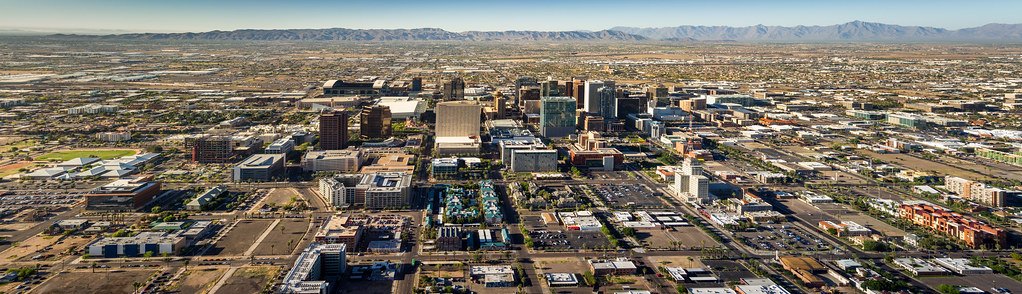
Tucson has two enclosed malls left. Both are now on the market simultaneously. Park Place Mall, a 1.1-million-square-foot property on East Broadway, is being actively marketed by Phoenix-based Newmark while carrying $152.7 million in delinquent loan debt. Tucson Mall, on North Oracle Road, was placed for sale by Brookfield last year and has yet to attract a buyer, with $174.9 million of its own loan in delinquency. Together, the two properties represent more than $327 million in distressed debt and a collective bet that someone will buy what remains of Tucson’s enclosed retail infrastructure.
That framing understates the more consequential story. The enclosed mall as a format is ending nationwide, but the land, the parking acres, and the anchor boxes are not going anywhere. At Park Place, the conversion to something more durable is already underway in plain sight. Understanding the sequence, and what it signals for the commercial real estate professionals and clients operating in these corridors, is where the real analysis begins.
The Numbers Behind Both Listings
According to Shopping Center Business, only 1,200 enclosed malls remain operating in the United States, a figure projected to drop below 900 by 2028. No large indoor mall has opened anywhere in the country since 2019. Tucson’s situation reflects that national arithmetic precisely: two properties whose debt structures were sized for a retail format that no longer performs at the level needed to service them.
Park Place generates more than $170 million in annual revenue from tenants including Dillard’s, Century Theaters, Total Wine, and Old Navy. That figure sounds healthy until it is set against $152.7 million in loan delinquency and a prior foreclosure sale in 2023 in which the property changed hands for $87 million. The gap between revenue and the debt load the property now carries is the core problem. Tucson Mall, with $174.9 million in loan delinquency and more than a year on the market without a buyer, faces an even more uncertain timeline.
What these numbers reveal is the structural math of operating an enclosed mall in a secondary market. The format depends on anchor-store traffic to sustain the inline tenants who pay the rents that service the debt. When one anchor closes, the traffic equation weakens. When two or three close, inline tenant sales fall, leases get renegotiated or vacated, and the gap between revenue and debt accelerates. Neither mall is in free fall; both have significant tenants still operating. But the delinquency figures indicate the current configuration is not generating enough to meet obligations, which is why both properties are for sale rather than being refinanced or held.
What the Park Place Conversion Tells Us
At Park Place, the adaptive reuse process is already running at the margins of the property, and it follows a sequence that has played out in comparable mall transitions across the country. The former Macy’s location, which closed in 2020, has been purchased by Bourn Cos. for mixed-use redevelopment. The former Sears space has been converted to climate-controlled self-storage for Public Storage. A residential complex is planned for the southern parking lot. New food concepts, including Cold Beers and Cheeseburgers with a 3,000-square-foot patio and Paris Baguette, are filling activity gaps inside the center itself.
The anatomy here is not accidental. Anchor boxes are typically held under separate ownership from the mall they anchor, which is why they move first. Bourn Cos. could acquire the former Macy’s structure and execute its own redevelopment plan without waiting for the broader Park Place sale to resolve. The Sears-to-storage conversion follows a different but equally logical path: when retail demand has evaporated from a large-format box and the structure does not easily convert to restaurant or office without major capital investment, climate-controlled self-storage generates positive cash flow on terms that work for investors with a shorter time horizon.
The parking lot residential project completes the picture. Enclosed mall parcels carry far more asphalt than any post-retail use requires. Converting peripheral parking acreage into multifamily housing brings density to already-entitled land, compressing the development risk compared to a true ground-up project. As retail specialist Nancy McClure noted in the Arizona Daily Star’s reporting, “Malls redesigned into destinations for living, working and dining are the way forward.” What that sentence leaves implicit is that the transition requires a specific team: commercial real estate advisors who understand distressed-asset debt structures, developers with mixed-use conversion track records, legal counsel for rezoning and lease restructuring, and architects experienced in repositioning large-format retail into something a community will actually use.
What This Means if You’re Advising at the Mall’s Edge
For real estate professionals in Southern Arizona, the simultaneous listing of both Tucson malls creates an advisory moment that extends well beyond the centers themselves. Hundreds of retailers, restaurants, and service businesses operate in the peripheral ecosystems around Park Place and Tucson Mall: the strip centers, restaurant pads, and freestanding buildings whose customer traffic historically drew from the malls’ activity. Those tenants and their landlords are making lease and pricing decisions right now against a backdrop that is harder to read than a stable retail corridor.
For inline tenants at either mall: Lease renewal decisions over the next 12 to 24 months carry meaningful uncertainty. Foot traffic during a multi-year conversion can fall sharply before it recovers, and the customer mix of a converted center, once residential and dining replace retail, draws a different visitor than the one who was there in 2022.
For owners and investors in adjacent retail: A retail pad near Tucson Mall is being priced by buyers who will discount heavily for conversion uncertainty. Understanding whether the nearby mall is in early-stage conversion, mid-stage, or still pre-sale matters considerably for how that discount should be sized. A seller who can document the conversion timeline and the traffic projections that accompany it is in a better negotiating position than one who cannot.
For developers eyeing the conversion upside: The $327.6 million in combined loan delinquency will resolve in one of two ways. Either both properties transact at prices that reflect their redevelopment value rather than their retail income, or they continue a slow decline that accelerates the departures of the tenants currently keeping them viable. The former is better for the surrounding market. The latter creates a longer and messier corridor disruption. Which path each mall takes, and on what timeline, depends in part on whether buyers with the capital and the operational expertise to execute mixed-use conversions step forward.
Tucson’s enclosed mall transition is not a peripheral footnote to Southern Arizona’s commercial real estate market. It is the central structural shift in two of the city’s most important commercial corridors. The professionals who understand where each property is in its conversion arc, and who are advising tenants and investors operating near these assets, will be the ones whose clients are positioned for what comes next rather than surprised by it.
Who are Arizona’s best real estate professionals?
See the honors, or nominate the professional who belongs on the list.
Explore the Real Estate rankings



