

Majestic Realty’s Tribal Ground Lease and Phoenix’s Industrial Space Crunch
A 99-year deal near Scottsdale reveals why Phoenix’s Class-A industrial supply problem is structural, not cyclical.
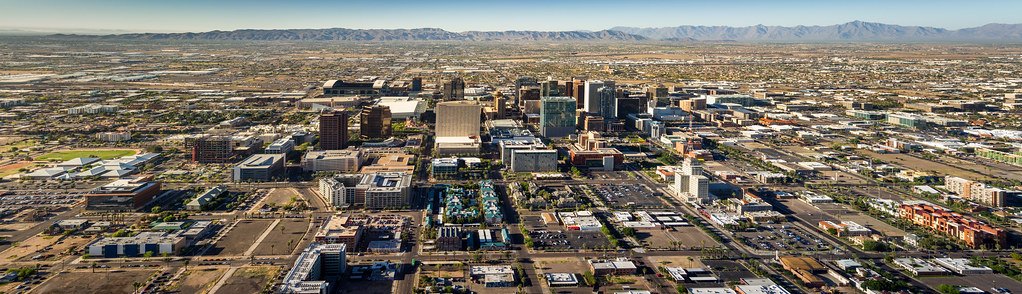
The nation’s largest privately-held industrial real estate developer just signed a 99-year ground lease with the Salt River Pima-Maricopa Indian Community to build nearly one million square feet of Class-A light industrial space beside one of Scottsdale’s most recognized entertainment districts. That is not a routine transaction. It is a signal about where Phoenix’s industrial market now stands and how companies trying to find space in the Valley need to be thinking.
Why Industrial Space Has Become This Hard to Find
Phoenix’s industrial real estate market posted 22.7 million square feet of net absorption through the first half of 2026, while new deliveries fell 53 percent year-over-year. The result: vacancy compressed to 9.6 percent by the end of the second quarter, down roughly 260 basis points from where it stood twelve months earlier. Supply is not catching up to demand, and the gap is not closing.
The semiconductor effect is real and it compounds. Arizona now ranks first in the country for semiconductor industry expansion, with more than 60 facility expansions since 2020. TSMC’s ongoing Phoenix buildout, along with the suppliers, toolmakers, and logistics firms that orbit major fabs, creates industrial demand that does not behave like ordinary warehouse demand. These companies need Class-A space with specific power and loading requirements, on sites with quick freeway access, close to existing tech infrastructure.
That narrows the available site universe dramatically. The northeast Phoenix and Scottsdale corridor, which sits along the Loop 101 and offers direct freeway access to major distribution hubs across the metro, is precisely where industrial users want to be. And there is very little developable land left in that corridor that can be assembled quickly, permitted cleanly, and built at scale. That is exactly the problem Majestic Realty set out to solve when it started talking to the SRPMIC.
What a 99-Year Ground Lease on Tribal Land Actually Means
This deal is Majestic’s first ground lease with a tribal community anywhere in the United States. That distinction matters, and it is worth understanding why ground leases on tribal land are structurally different from standard commercial transactions in Arizona.
On tribal land, you do not own what you build. A ground lease is an agreement to use someone else’s land for an extended period, in this case 99 years, while paying rent rather than a purchase price. The buildings and improvements revert to the landowner at the end of the term. That structure appears in some major urban markets, particularly around airports and public land in dense cities, but it is unusual for industrial development in the Phoenix metro. For tenants considering a lease here, the practical implication is clear: the building you occupy is sitting on ground the building’s developer does not own.
Tribal sovereignty creates a different legal environment. SRPMIC land is held in federal trust, giving it a distinct status from municipal or private land. Financing, permitting, zoning, and dispute resolution can all follow different rules than what a tenant or broker expects in a standard Phoenix CRE deal. The fact that Majestic, with nearly 80 years of development experience, described this as its first such tribal partnership is itself a reminder that these structures require specific legal and transactional expertise that most commercial real estate professionals have not encountered.
The approved uses at this project are notably broad. The development envisions tenants across food processing, bottling, printing, machine shops, manufacturing, and distribution. That is a deliberately wide aperture, aimed at drawing the kinds of users who need dock-high doors and high clear heights rather than only e-commerce and last-mile delivery tenants. The 59-acre site will yield up to eight buildings, each as large as 200,000 square feet and divisible down to roughly 20,000, which gives the project a range spanning mid-size regional manufacturers up to major distribution users. Groundbreaking is anticipated in 2027.
What This Means If You Are Leasing or Developing Industrial Space in Phoenix
The practical takeaway from the Majestic-SRPMIC announcement is not that tribal land is an obscure corner of the market. It is that Phoenix’s industrial market has tightened to the point where the most sophisticated developer in the country is pursuing deal structures it has never tried before, in a location category it has never entered, because that is where the available land is.
For tenants, this changes the due diligence calculus. Companies shopping for industrial space in the Scottsdale corridor will increasingly encounter sites with non-standard ownership structures, whether tribal ground leases, long-term city ground leases, or other arrangements that require careful review of what rights a tenant actually holds. Leases on tribal land may require additional federal approvals, and financing a build-to-suit or tenant improvement on such a site requires a lender familiar with that structure. A broker who has only worked conventional fee-simple transactions may not flag these issues until they have already cost a client months.
For investors and developers, timing is the variable that matters most right now. Absorption data suggests demand will remain ahead of supply through the anticipated 2027 groundbreaking and beyond. But the lead time to find an advisor who understands both the industrial submarket dynamics and the legal specifics of tribal land transactions is not trivial. The brokers and attorneys who can navigate this kind of deal confidently are not interchangeable with general commercial practitioners who primarily handle office or retail work.
Arizona’s industrial market has reached a structural tightness where the most productive sites left in the Scottsdale corridor require deal expertise that simply did not exist at scale here five years ago. When the nation’s largest private industrial developer calls its own transaction a first, that is useful information for anyone who thinks they can run a routine site selection process and land where they need to be.
Who are Arizona’s best real estate professionals?
See the honors, or nominate the professional who belongs on the list.
Explore the Real Estate rankings